Serial Hobbiest
Refused to decide, so I'm doing it all
A walk into the dark
House of Leaves by Mark Z. Danielewski
My rating: 4 of 5 stars
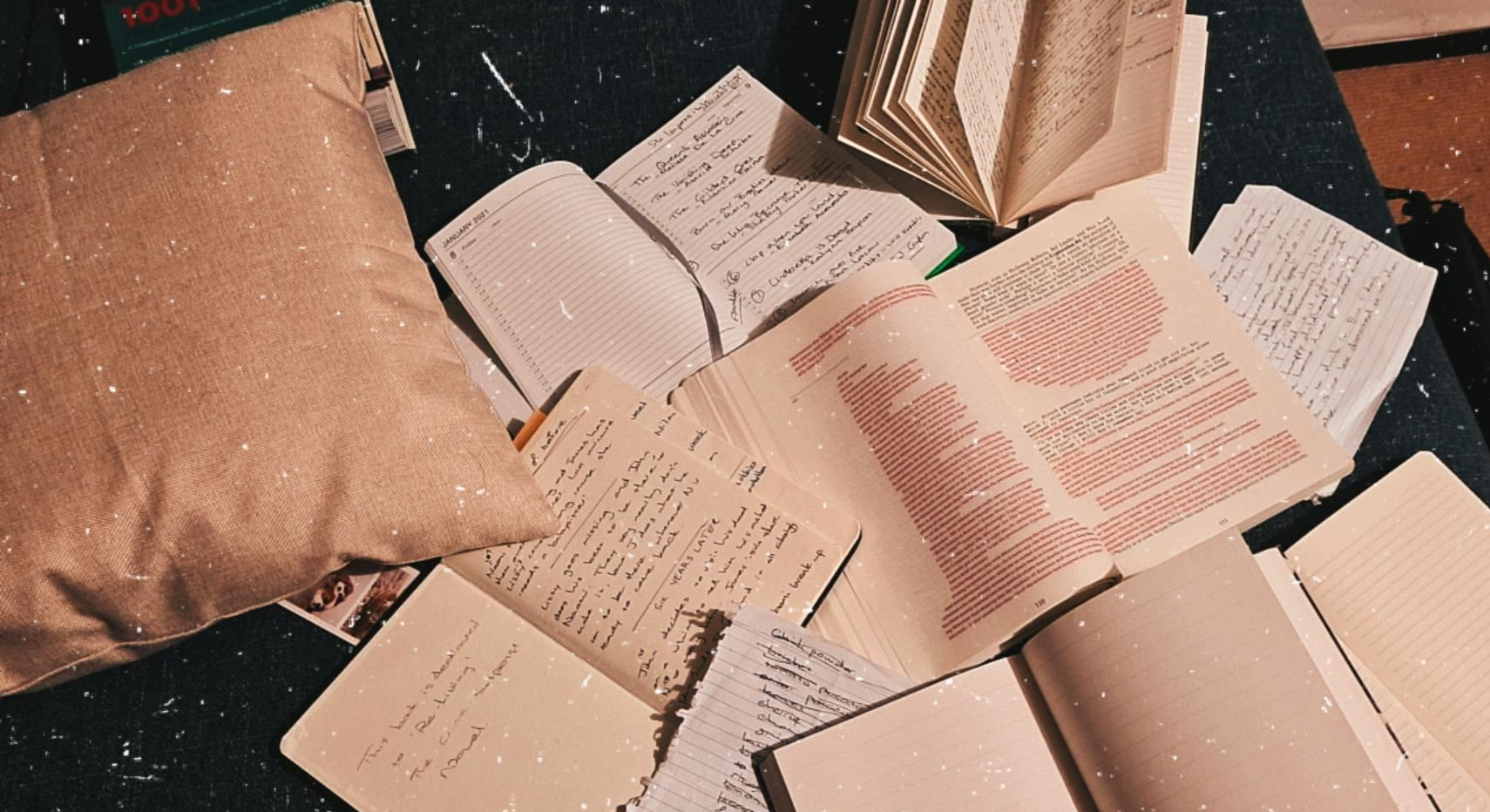
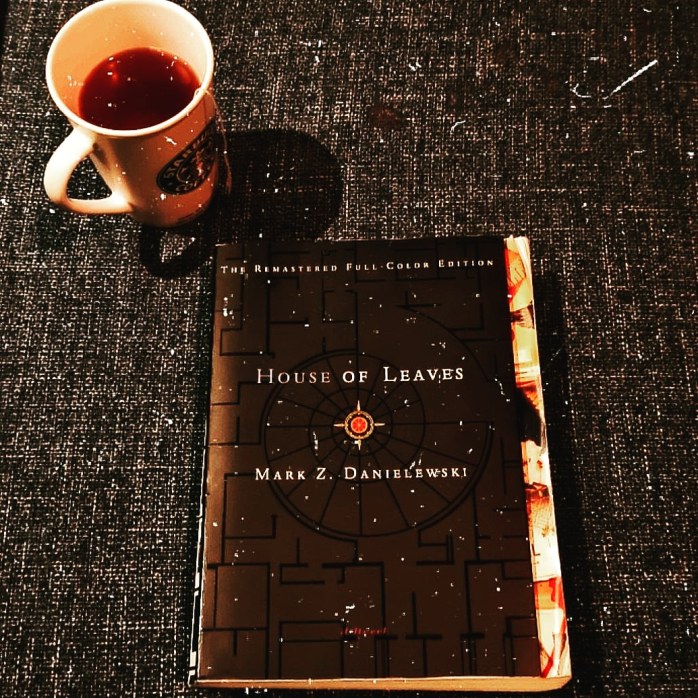
This review is much longer than most I intend to write. The story was far more complex than most, though, and it took me more than a month to read (Feb 2020-May 2021). My notes were also explosions of writing, disjointed and emotive. I tried to make sense of it in a more or less chronological way. I may not have succeeded.
A note on finally finishing
I almost can’t believe it’s over. It’s been such a lengthy process of reading interspersed with intense life-events (COVID-19 pandemic being one), that this day could well not have come.
And yet, I needed to know. Which, I suppose, is the short review.
The long review will hopefully serve to emphasise that no part of the process is simple, nor particularly pleasant. Ultimately, however, worth it.
Muddled notes about the journey
It took me about 30 pages into the chapters (not the prologue) to fully appreciate what was happening. Or rather, to untangle the three main threads enough to get the nuances of perspective. Even still, every time ‘of’ is used rather than ‘have’, it drove me up a wall. There’s something to be said for consistency in character, though, so setting popular grammatical inaccuracies aside, I pushed onward.
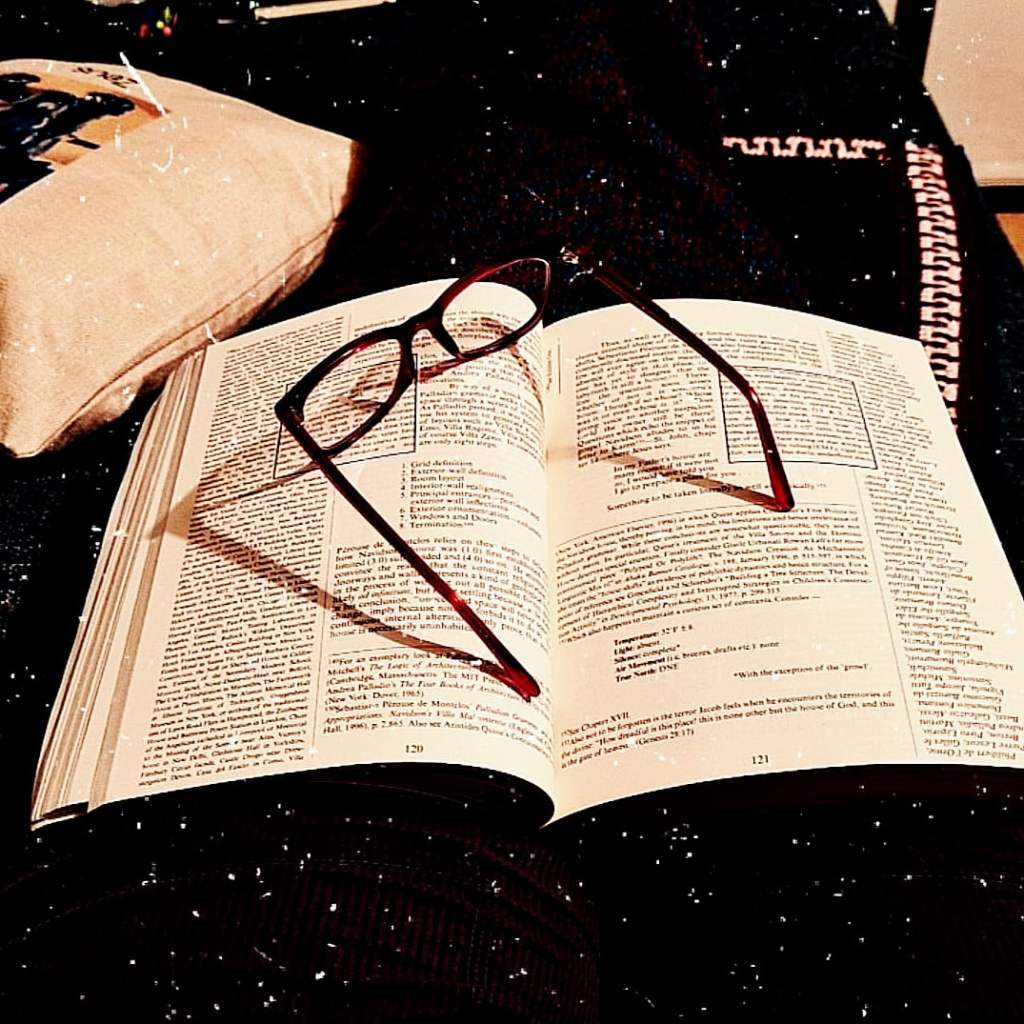
The Navidson Record, which is the main narrative, is theoretically a home documentary about a disturbed suburban home. The contents and sequence of this documentary is relayed to the reader as part of what largely seems to be a pseudo academic paper.
To lay it out in all it’s complicated glory, in the world between the pages, The Navidson Records exist and has had many critical analyses written on the production. We’re exploring Zampano’s analyses (a previously blind man now dead, who could not have ‘watched’ the records) through the lens of Johnny Truant, via the footnotes. Brilliant. (Johnny’s the ‘of’ instead of ‘have’ offender.)
Johnny and Zampano’s, writings are then further commented on by various critics as well as, occasionally, the (breaking the fourth wall of literature) editors of the House of Leaves who hypothetically compiled all of the above including various appendixes.
The Editors do seem to hold a rather dry sense of humour, which I appreciated, though I admit that the work did occasionally put my love of critical analyses to the test.
Johnny Truant, presumably the protagonist of this tale, drives a version of the present and weaves his story in with that of the documentarians exploring the house, family and crew included. As a writer myself, this is quite the undertaking and I’m frankly a little awed by it. As a reader, it’s a fascinating web to wade through (mixed metaphor?), and that’s even before the actual content starts taking shape.
Just now, reading through my notes on the story, I thought the narrative must’ve gotten to me more than I realised, as the voice and writing suddenly took an extreme turn. Then I remembered, no, it’s a letter from within the book that had been written in code and these notes were my past self writing down the hidden message, thereby representing just one of the small ways in which the book is a part of the story and the reader is given the opportunity to participate therein.
Quite frankly, the story was more than I expected. The deepening of the reader’s understanding of Johnny’s life is both indirect and immediate at times. One moment it’s the same drunken verbal continuation I’ve come to appreciate, the next moment, I ofund myself thrown into a different perspective and seemingly dragged alongside the narrator into madness. The writing is more evocative than I’ve experienced in quite some time, extremely moving and immersive.
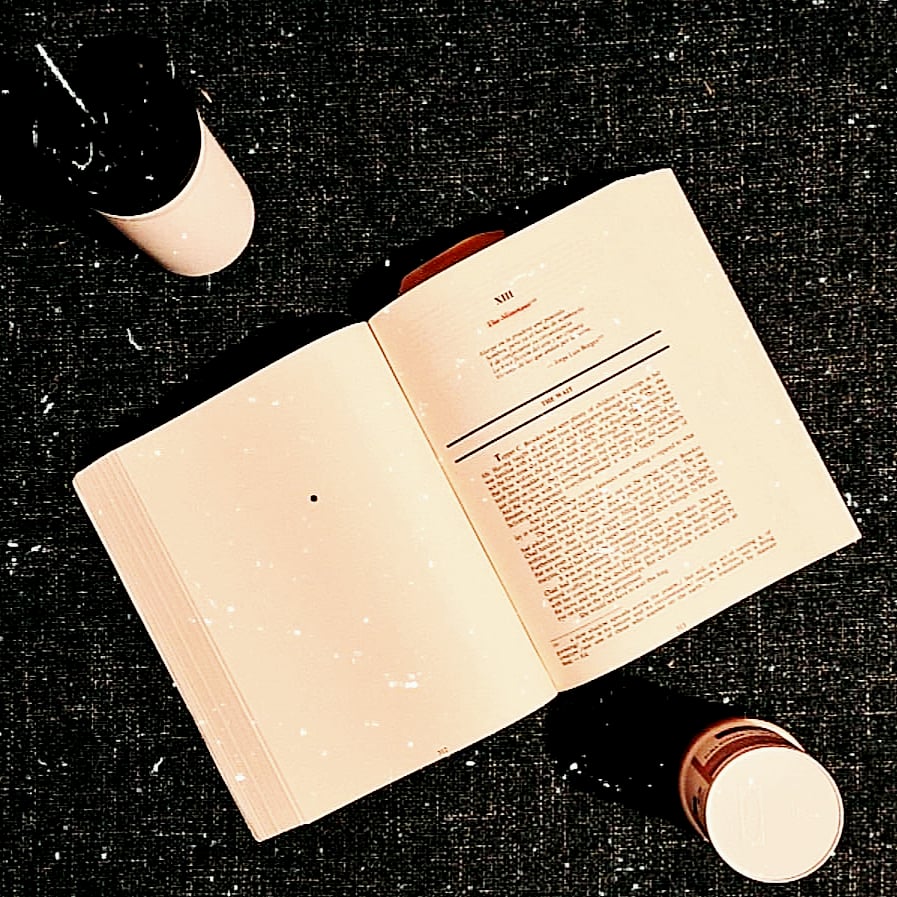
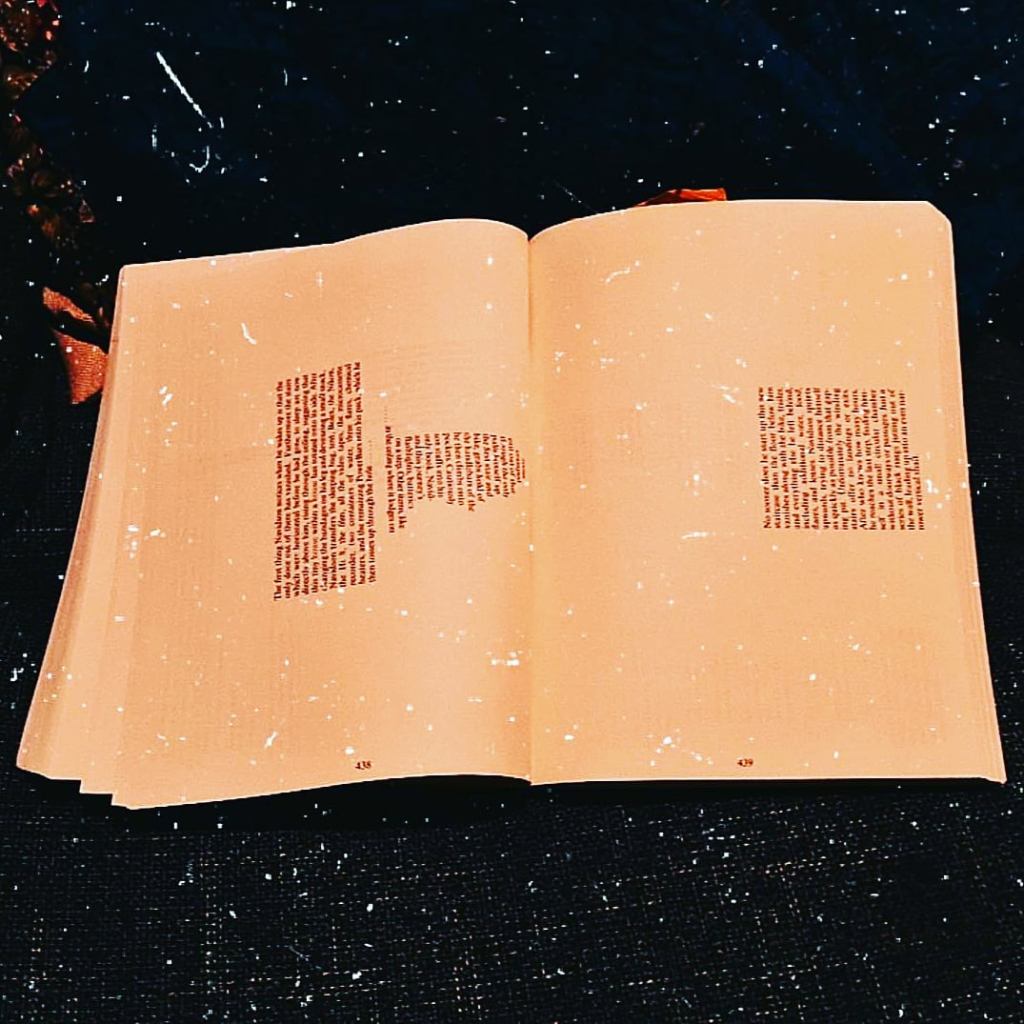
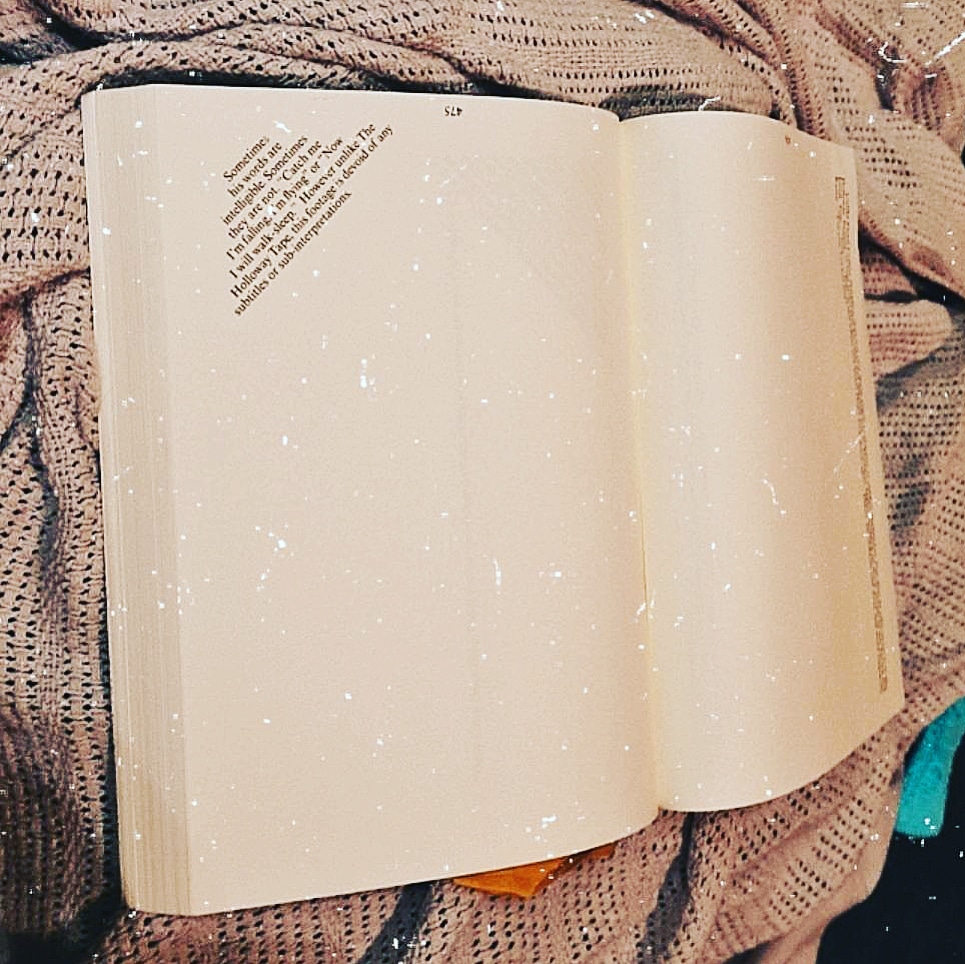
Ironically, a great deal of the experience occurs in the appendixes of the work, and so it did occasionally feel jarring to leave those ‘additional’ pages to pick the thread of the various main stories back up again.
The boat’s gone. ‘So?’
You’re mate’s dead. ‘So?’
Hey, at least you’re alive. ‘So?’An awful word, [so], but it does harden you.
Johnny Truant, House of Leaves
It hardened me.
There are definitely some parts that drag a bit, or that aren’t quite so captivating as others. But I feel I did come to understand the ride I was on. Honestly, sweeping sections of the book feel like an abject exploration of what it is to fall into insanity, when your mind breaks and truth and fiction become so blended and blurred than neither exists fully. Which could easily be a philosophical stance. There’s something deeply sinister about it. Perhaps that’s why House of Leaves is often listed as a truly scary read. I didn’t find it scary, but I did find it disturbing. I also think there is a long list of deeply personal true-life topics and experiences I was forced explore within these oddly formatted pages. And isn’t that the point?
View all my reviews
 Serial Hobbiest