Serial Hobbiest
Refused to decide, so I'm doing it all
Look … It’s a lot
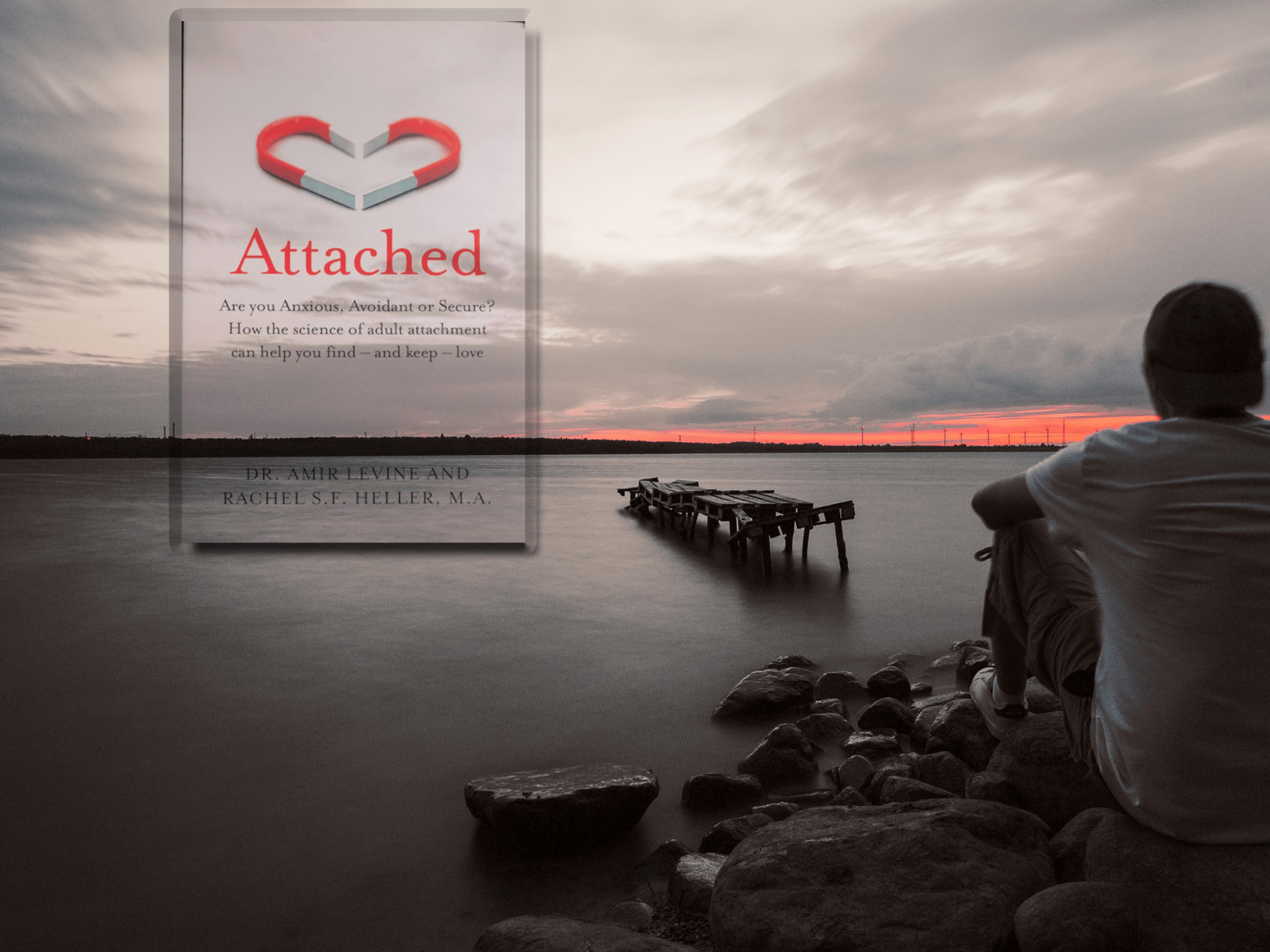
Attached: The New Science of Adult Attachment and How It Can Help You Find—and Keep—Love by Amir Levine
My rating: 4 of 5 stars
Look, I won’t lie, the cover and title are fairly shocking, immediately conjuring images of Garfield’s owner at a mixer, or Luke Danes being startled by an audio cassette.
For all that, however, this book is straight-up life changing. It turns the majority of what is pervasive about love and relationships in society on its head, and offers instead some clear patterns and behaviours to discern and assist in making better decisions. I’ve been in a relationship for more than a decade now. I overthink things. My relationship, and thinking about my relationship, is something I prioritise. This book impacted almost every aspect of what I felt I understood about our dynamic.
Attached is a resource, building on the foundational Attachment Theory by John Bowlby and Mary Ainsworth. In it’s origin, it relates specifically to children and the relationship between a mother and child. The work draws on a variety of fields, including ethology and developmental psychology (The Origins of Attachment Theory). Amir Levine and Rachel S. F. Heller build on this foundation regarding childhood attachment with studies on how those early experiences follow through to adult patterned behaviour. Honestly, it’s fascinating.
From what I understand there are several resources following this publication that further build on the research, creating a rather significant body of information for anyone who’s interested. My own next stop will be to do this quiz to see if I do fall into the attachment style category I think I do, and to what degree.
Ultimately, reading this work can be valuable regardless of what stage you’re in with your own relationship/s – even if that stage is not being in one, not wanting one, or isn’t a romantic relationship, but a friendship. It can be a little brutal at times, a little triggering at others, but it explains a lot, and through a new lens. One small example of this is the way in which a lot of labels seem to be a part of dating evaluation these days – gaslighting, narcissism, love-bombing, etc. etc. – and while those may still be applicable in a given situation, the source of those behaviours, and the (usual) lack of intent behind them, becomes clear here. More than that, there’s a clear explanation as to why those currently in the dating pool might feel like all they’re meeting are arseholes delivering mixed messages. Our own needs and the needs of our partners, and how those needs are or are not compatible, are highlighted in an almost instructional format. Naturally they can be critically evaluated from there, but it’s good to have a place from which to start.
I do feel one element of the work is missing, however, and that’s a thorough look at the Fearful Avoidant category. This is justified early on with a note that roughly 4% of people have been seen to be Fearful Avoidant whereas the other three categories are far more prevalent. To this I say that, anecdotally, I feel I’ve met a significant number of fearful avoidants and, more specifically, 4% of the human race is still roughly 316 million people and therefore might warrant a chapter.
On that note, good luck and good night.
View all my reviews
 Serial Hobbiest
This sounds nothing like what I would usually read but it does sound interesting, so I might have to check it out for myself.
LikeLike
The subtitle put me off for the longest time, not gonna lie. But, to speak bookish, it’s definitely a solid resource for character and plot development.
LikeLike